Good news: artificial turf requires 95% less maintenance than natural grass. Here's everything you need to know.
When you choose artificial turf, you're choosing freedom. No more weekly mowing. No irrigation system to maintain. No fertilizer schedules. No brown patches to reseed. Your turf stays lush and green through New Jersey winters, summer heat waves, and everything in between.
That said, a small amount of simple maintenance will keep your turf looking its best for 15–25 years. This guide covers everything you need to know.
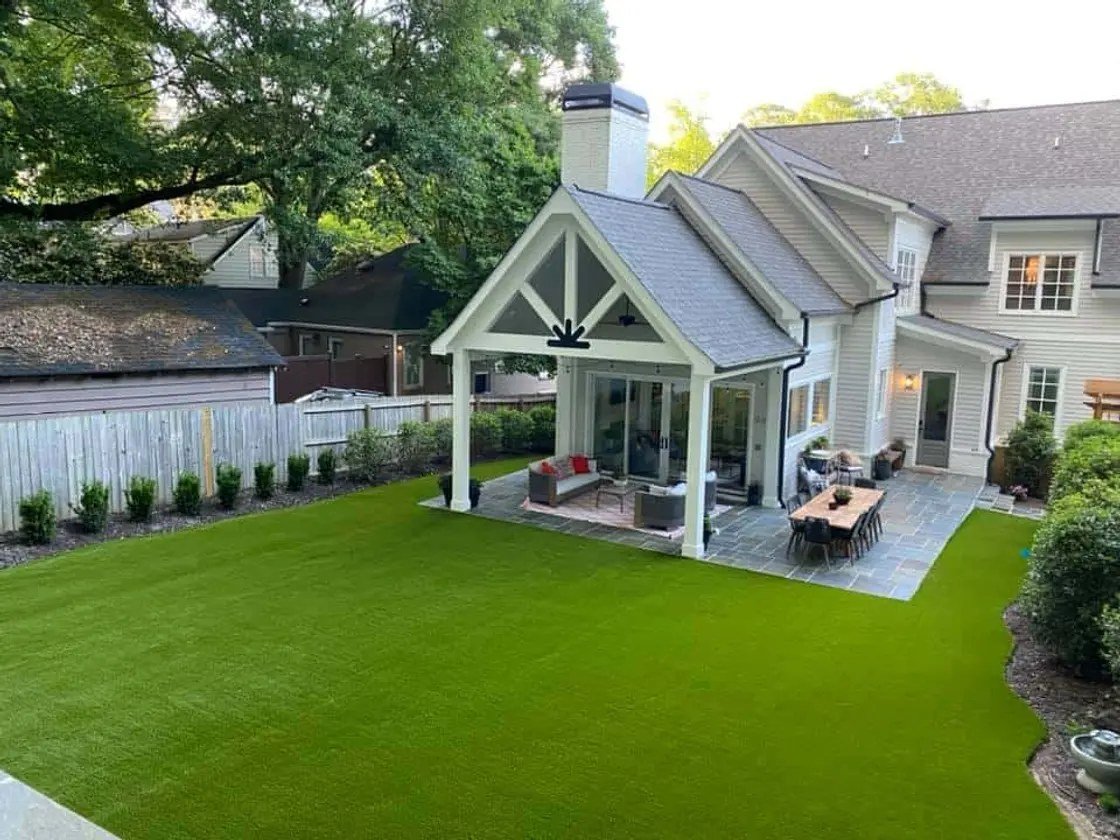
Periodically brushing your artificial turf keeps the fibers standing upright and maintains that natural, lush appearance. Use a stiff-bristled brush or a plastic lawn rake — never metal tines, which can damage the turf backing. Brush against the grain (opposite the direction the blades naturally lay) to revive flattened areas. Focus on high-traffic zones like pathways and play areas. For large areas, a power broom makes the job much faster.
Frequency: Monthly, or more often in high-traffic zones. After any large gathering or heavy use event.
Light hosing removes dust, pollen, and airborne debris that can accumulate on the surface. During NJ's allergy season (spring and fall), a gentle rinse as needed keeps the turf clean and fresh — rain handles it most weeks. For a more thorough deep clean with mild soap and a soft brush, plan on doing this seasonally — about 2 to 4 times per year, depending on usage and whether you have pets. Avoid harsh chemicals, bleach, or solvents — these can damage the turf fibers and infill.
Safe cleaners: Mild dish soap, white vinegar diluted 1:1 with water, enzymatic pet odor cleaners (for pet areas). Avoid: Bleach, solvents, acetone, or harsh degreasers.
Leaves, twigs, and other natural debris should be removed when they accumulate to prevent organic material from breaking down into the infill, which can cause odors and support weed growth at the edges. Use a leaf blower for efficient removal — it works perfectly on artificial turf without damaging fibers. A plastic rake is also effective for larger debris.
Frequency varies by site: If you have no overhanging trees, you may rarely need to do this at all. Properties with mature trees see more debris in NJ's fall season (October–November). Adjust to your conditions.
Remove solid pet waste daily using a biodegradable bag. Rinse the area with a garden hose to dilute and wash away liquid waste into the drainage system below. For odor control in pet areas, apply an enzymatic cleaner (like Nature's Miracle or a similar product) as needed — typically every few weeks for households with multiple dogs, less often for occasional use. Our antimicrobial turf infill options significantly reduce odor between cleanings. Avoid ammonia-based cleaners as they can attract pets back to the same spots.
No pets? Skip this entirely — none of this applies to non-pet installations.
Once a year — ideally in spring after the freeze-thaw season — walk your turf perimeter and check for any lifting edges or visible seams. In NJ's freeze-thaw cycles, ground movement can occasionally cause minor lifting at the edges. A yearly check is plenty for most installations; high-traffic areas or sites with significant ground settling may benefit from a more frequent look. If you notice any seam separation or edge lifting, contact Turf Boss NJ promptly — small repairs done quickly prevent larger problems. Our installations include a workmanship warranty, so call us first if you see any issues.
One of the best things about artificial turf in New Jersey is how little you have to do in winter. Your turf handles NJ winters beautifully on its own. If snow accumulates, you can leave it to melt naturally (preferred) or gently remove it with a plastic snow shovel — never metal-edged tools. Avoid using rock salt or chemical ice melt directly on the turf surface as it can damage fibers and backing. Sand-based ice melt is safer if needed at edges.
In spring, give the turf a good rinse and brushing to refresh it for the new season. Check edges and seams after the freeze-thaw season.
Frequencies vary based on manufacturer specs, daily usage, and site conditions — no overhanging trees means far less debris, no pets means no odor treatment. Use this as a starting point and adjust to your conditions.
| Task | Typical Frequency | Notes |
|---|---|---|
| Remove debris (leaves, twigs) | As needed | Skip entirely if no overhanging trees |
| Light rinse with hose (dust/pollen) | As needed | Rain handles it most weeks in NJ |
| Pet waste pickup & rinse | Daily | Pet installs only |
| Brush/rake fibers upright | Monthly | More often in high-traffic zones |
| Deep clean with mild soap | 2–4× per year | Seasonal — more for pets or heavy use |
| Inspect seams & edges | Annually | Combine with professional inspection |
| Enzymatic odor treatment | As needed | Pet areas only |
| Infill top-dressing (if needed) | Every 1–2 years | Sooner in high-traffic zones |
| Professional inspection | Annually | Included with our maintenance plans |